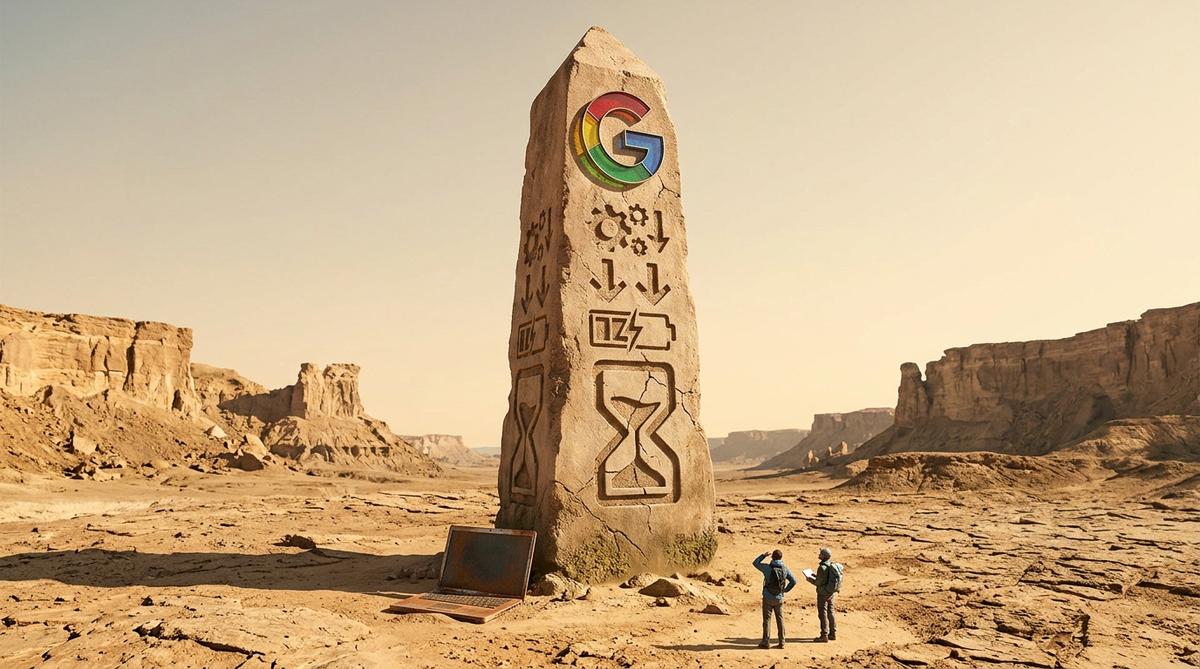
ChromeOS has a firm expiration date for the first time. A newly updated Google support document confirms the operating system will receive updates only through mid-2034, and that means some newer Chromebooks will fall short of the full 10-year update promise Google attached to them. Sources covering the change describe it bluntly: ChromeOS users get eight years of support from now, not a decade.
TL;DR: Google’s updated support document for IT administrators confirms ChromeOS will receive software updates and security patches only through mid-2034 — two years short of the 10-year promise attached to some newer Chromebooks. Google says “many devices” will be offered an upgrade path to Googlebook OS, its AI-focused successor, but has not revealed which models qualify, and the transition requires new licenses.
Is Google really ending ChromeOS updates before its 10-year promise runs out?
Yes. Google has set a hard end of support for ChromeOS at mid-2034, even though some Chromebooks carry a 10-year update promise that extends past that date. Coverage from Hardware Busters states it directly: newer Chromebooks with 10-year promises stretching beyond mid-2034 “must move to Googlebook OS” to continue receiving updates.
The math is unforgiving. A promise of a decade of updates was a core selling point for Chromebooks, particularly in schools and businesses where long device lifecycles drive purchasing decisions. With ChromeOS updates stopping at mid-2034, any device whose promised window extends past that point loses coverage early — unless it makes the jump to the successor platform.
One technology outlet summed up the shift this way: the rise of the Googlebook means ChromeOS users get eight years of support, not ten. For IT administrators, the support document is now official guidance rather than rumor. ChromeOS is not disappearing tomorrow, but the clock on it is finally visible. The question shifted from “if” to “when” — and Google answered.
When exactly does ChromeOS support end?
Mid-2034. Google’s support document for IT administrators confirms that ChromeOS will receive software updates and security patches through that point, after which they cease entirely. Multiple sources, including Chrome Unboxed, describe the document as re-confirming “regular updates through mid-2034” — phrasing that suggests this date was already circulating before Google made it explicit.
Why mid-2034 and not later? Tech Insider’s headline captures the discrepancy: Google capped ChromeOS support at 2034, not 2036, cutting the platform’s life two years short of what the 10-year promise would imply. Devices purchased recently with a full decade of guaranteed updates would otherwise have been covered into 2036.
That gap matters in practice. A Chromebook bought in 2026 with a 10-year promise would lose OS support in 2034 — leaving roughly six years short of what buyers were told. Google’s answer to that gap is not an extension but a migration: the upgrade path to Googlebook OS. Until mid-2034, though, ChromeOS remains fully supported. Patches, security fixes, and regular updates continue as normal during that window. There are still years of life in the platform yet.
What is Googlebook OS, and why is Google replacing ChromeOS?
Googlebook OS is the successor to ChromeOS — an AI-focused operating system that Google is positioning as the future of its laptop platform. Sources describe it as the replacement ChromeOS devices will eventually transition to, with Google framing the change as an evolution rather than an abrupt abandonment.
The details Google has shared so far are limited. What is confirmed: “many” Chromebook models will be able to upgrade to Googlebook OS rather than being left behind, and the new system’s focus is artificial intelligence. Spiderweb’s coverage pulls no punches, saying ChromeOS will soon be entirely forgotten — the system powering Google’s browser-based laptops will cease to exist, though many years remain before that happens.
The replacement also has a licensing dimension that IT departments will care about. According to coverage of the support document, Google requires new licenses for any transition from ChromeOS to Googlebook OS. That means the switch is not a free, invisible background update — it involves a licensing step that administrators will need to manage.
The naming itself signals the scope. This is not ChromeOS version 2; it is a new platform with a new identity, built around AI capabilities that ChromeOS was never designed to carry. Google is treating it as a generational change for its hardware line.
Which Chromebooks will get the Googlebook OS upgrade?
Google has confirmed that some newer Chromebooks will qualify for the upgrade to Googlebook OS — but it has not revealed which models. Notebookcheck’s coverage states this plainly: the company confirmed eligibility for some newer devices while declining to name them, leaving owners guessing about their hardware’s fate.
What Google has said publicly is that “many devices” will support the upgrade, according to Thurrott’s reporting. That word choice — “many,” not “all” — is doing a lot of work. It promises a broad migration path while carefully avoiding a commitment that every Chromebook will make the jump.
For now, the eligibility picture looks like this:
- Some newer Chromebooks will qualify for the Googlebook OS upgrade
- Google has not published a list of qualifying models
- Google describes the upgrade path as available for “many devices”
- Devices with 10-year promises extending past mid-2034 must move to Googlebook OS to keep receiving updates
- Older models may be left on ChromeOS until support ends in mid-2034
- The transition requires new licenses, per Google’s support document
- No pricing or licensing details for the switch have been announced
- Owners currently have no way to check eligibility
Until Google publishes the qualifying list, buying decisions become harder. Anyone purchasing a Chromebook today does not know whether their device ends at an OS dead end or continues onto the new platform.
What happens to Chromebooks that can’t upgrade?
For Chromebooks that do not qualify for the Googlebook OS transition, the road ends at mid-2034. After that point, Google stops delivering software updates and security patches for ChromeOS, per the support document confirmed for IT administrators.
That gives non-upgradeable devices a defined but finite lifespan. Until mid-2034, they continue receiving regular updates as before — Chrome Unboxed’s reporting emphasizes that Google re-confirmed regular updates through that date, so there is no immediate change for current owners. The platform is not being abandoned early; it is being wound down on a schedule.
After support ends, though, the implications are familiar to anyone who has owned hardware past its update window. Security patches stop, and using an unpatched operating system online becomes progressively riskier over time. For a system whose identity was built on the browser, running outdated software carries real consequences.
Google’s messaging frames the upgrade as the escape hatch: newer, qualifying devices move forward, while the rest reach end of life with ChromeOS itself. Pocket-lint put it succinctly — Google has officially drawn a firm line in the sand for when ChromeOS is superseded. Devices on the wrong side of that line have a date certain. Owners of older models now have years, not vague assurances, to plan their next hardware purchase.
Does the mid-2034 cutoff break Google’s AUE commitments?
For some Chromebook buyers, yes — the mid-2034 end date falls short of the 10-year update promise Google attached to newer devices. Hardware Busters reports that Chromebooks whose 10-year windows would have extended past mid-2034 will not get full ChromeOS support for that decade. Instead, Google is pointing those devices toward Googlebook OS, the successor platform. In other words, the promise is being honored through a platform transition rather than through continued ChromeOS updates.
This distinction matters. Google is not silently abandoning devices, but it is also not extending ChromeOS to cover every 10-year window in full. A Chromebook bought in 2025 with a promised decade of updates would, under the new policy, see ChromeOS updates stop roughly two years early — coverage from tech-insider.org describes it as support ending in 2034, not 2036. The remaining years depend on eligibility for the Googlebook OS upgrade, which Google has not fully specified.
What do IT administrators need to know about the transition?
The key facts come from Google’s own support document aimed at IT administrators. It confirms that ChromeOS devices will continue receiving software updates and security patches through mid-2034. After that point, the platform’s life ends. Google also confirms that “many devices” will support an upgrade to Googlebook OS, giving fleets a path forward without immediate hardware replacement.
There is a catch that administrators should plan around: moving a device from ChromeOS to Googlebook OS requires new licenses. That is a budgeting item, not just a technical one. A fleet migration therefore involves checking device eligibility against Google’s official list, scheduling the upgrade before the mid-2034 cutoff, and accounting for license costs. Since Google has not disclosed which models qualify, procurement teams should avoid assuming that their entire inventory will make the jump.
Should Chromebook owners replace their devices now?
In most cases, no. ChromeOS will keep receiving regular updates and security patches through mid-2034, which is years of usable life for the vast majority of current devices. As MSN’s coverage put it simply: “There’s a good few years in them yet.” Panic-replacing hardware today would waste money for no security benefit.
The smarter approach is to check where your device sits in the timeline. Older Chromebooks with short remaining support windows are the ones to watch, while newer models are the likely target group for the Googlebook OS upgrade — sources note that “some newer Chromebooks” will qualify. Before spending anything, verify your model’s status on Google’s official device list and wait for Google to disclose which Chromebooks make the cut. Rushed decisions based on headlines are exactly what the mid-2034 timeline does not require.
How does this compare to other platforms’ update policies?
ChromeOS is unusual in one specific way: it now has a hard platform end date. Rather than supporting each device for its own 10-year window, Google has set a single cutoff — mid-2034 — after which ChromeOS updates cease entirely. Sources describing the change note that some users effectively get eight years of support instead of a decade, because the platform itself stops before their individual promise runs out.
The successor model changes the comparison, too. Google is not extending a legacy OS indefinitely; it is retiring ChromeOS in favor of Googlebook OS, an AI-focused successor, and offering upgrades to “many devices” along the way. For buyers, the practical consequence is that long-term support now depends on two things: the platform timeline and per-device eligibility for the new OS. Any comparison with other platforms should start from that reality — a firm end date plus an upgrade path — rather than from the 10-year marketing promise alone.
What should buyers watch for when choosing a future Chromebook?
Buying a Chromebook now requires reading the fine print differently than before. The 10-year promise is no longer a guarantee of a full decade of ChromeOS, because the platform’s support ends at mid-2034 regardless of when a device was purchased. Here is what actually matters:
- The mid-2034 cutoff. ChromeOS updates and security patches stop then, per Google’s support document for administrators.
- Googlebook OS eligibility. “Many devices” will support the upgrade, but Google has not disclosed which models qualify.
- The official device list. Check Google’s published list before assuming your model will transition.
- License costs. Switching from ChromeOS to Googlebook OS requires new licenses, per coverage of the support document.
- Platform vs. device promise. A 10-year device promise now caps out at the platform end date unless the device moves to Googlebook OS.
- Effective support length. Some buyers get roughly eight years instead of ten, as reporting on the change notes.
- Successor maturity. Googlebook OS is described as an AI-focused successor; its rollout details are still emerging.
The safest strategy is conservative: prefer devices whose support windows end well before mid-2034, or wait until Google names the qualifying models.
Frequently Asked Questions
When will ChromeOS stop receiving updates?
Google’s updated support document for IT administrators confirms ChromeOS will receive updates and security patches through mid-2034. Coverage notes that this sets a firm end date rather than the per-device 10-year windows some buyers expected.
Will my Chromebook be able to upgrade to Googlebook OS?
Google says “many devices” will support an upgrade to Googlebook OS, but it has not disclosed which models qualify. Newer Chromebooks appear to be the target, so check Google’s official device list before assuming eligibility.
Does Google require a new license to switch to Googlebook OS?
Yes. Coverage of the support document indicates that moving a device from ChromeOS to Googlebook OS requires new licenses, which is a detail IT administrators will need to budget for during the transition.
Why is Google ending ChromeOS support in 2034 instead of 2036?
The mid-2034 cutoff falls two years short of the full 10-year update promise attached to some Chromebooks, as reported by Hardware Busters and other outlets. Google’s answer to those devices is the upgrade path to Googlebook OS rather than extended ChromeOS support.
Summary
Google has drawn a clear line under ChromeOS, and buyers should plan around it:
- ChromeOS will receive regular updates and security patches through mid-2034, per Google’s support document for IT administrators.
- The cutoff falls two years short of the 10-year promises attached to some newer Chromebooks — some owners effectively get eight years instead of a decade.
- “Many devices” will support an upgrade to Googlebook OS, the AI-focused successor, but Google has not yet disclosed which models qualify.
- The transition to Googlebook OS requires new licenses, which IT departments need to factor into budgets.
- No immediate action is needed: most devices have years of supported life left, so check your model’s status on Google’s official list before making any purchase or migration decision.
If you manage a Chromebook fleet, the next practical step is simple: watch for Google’s published eligibility list and model your license costs now, before the migration window gets crowded.