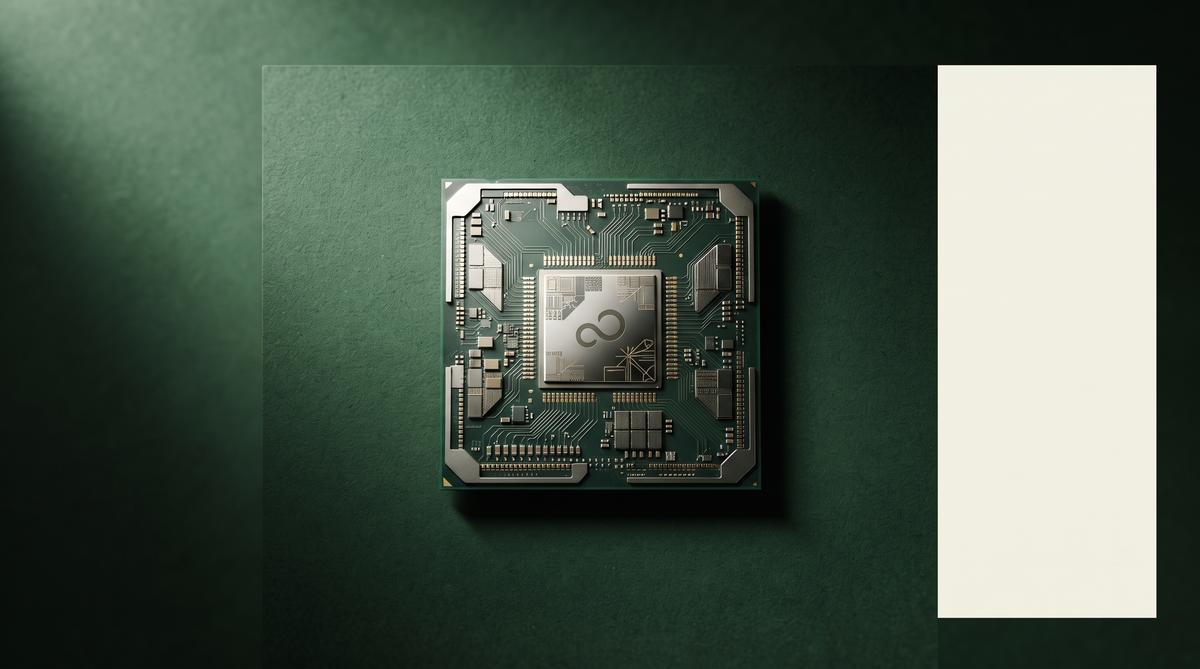
Fujitsu will begin global sales of FUJITSU-MONAKA, a 144-core Arm server CPU manufactured on a 2nm process, in November 2026 — a full year ahead of its original 2027 schedule. The company claims the chip delivers roughly 2x the AI inference performance of rival processors while cutting AI inference power consumption by about half. Alongside the CPU, Fujitsu is launching its own MONAKA Server, aimed squarely at governments and enterprises building sovereign AI infrastructure.
TL;DR: Fujitsu starts global sales of FUJITSU-MONAKA, a made-in-Japan 144-core 2nm Arm server CPU, in November 2026 — one year earlier than the originally planned 2027 launch. Fujitsu claims 2x AI inference performance versus competitors and roughly half the power consumption for AI inference workloads. The chip runs in air-cooled facilities and targets sovereign AI infrastructure, with Fujitsu’s own MONAKA Server launching the same month.
What Exactly Is Fujitsu’s FUJITSU-MONAKA?
FUJITSU-MONAKA is a next-generation server CPU designed and developed entirely in Japan, manufactured using a 2nm process with 3D-stacked silicon. According to Fujitsu’s announcement, the processor packs 144 Arm-based cores into a single package and is optimized specifically for AI inference and high-performance computing workloads rather than general-purpose hosting alone.
The chip was originally unveiled years ago as a 2027 project. That timeline has now collapsed. Fujitsu confirmed that global sales begin in November 2026, with its own Fujitsu MONAKA Server — a rack-mount system built around the processor — launching in the same month, including distribution to European markets.
Why does the Arm architecture matter here? Arm-based server CPUs compete with x86 incumbents on performance per watt, and Fujitsu has a long history with the architecture through the Fugaku supercomputer. MONAKA extends that lineage into commercial data centers. The company positions it as offering “world-class” computational performance, claiming 2x the AI inference performance of competing processors while consuming roughly half the power for the same inference workloads.
Why Is Fujitsu Moving the Launch Up to November 2026?
The original plan targeted 2027. Fujitsu pulled it forward to November 2026 — a twelve-month acceleration for a chip built on bleeding-edge 2nm silicon. The stated goal is to catch the AI infrastructure wave while demand for inference hardware is exploding and before competitors lock in the market.
The timing aligns with a broader commercial push. Fujitsu is not selling a bare chip and hoping system vendors pick it up. In November 2026, the company starts selling both the processor globally and its own Fujitsu MONAKA Server, with European server availability confirmed by channel reports. That bundled approach shortens the path from purchase to deployment.
There is also a national-industrial dimension. Japanese media coverage, including CNET Japan and ITmedia, frames MONAKA as a return of domestically designed CPUs to the world’s top tier of computing performance. For Japan, which hosts semiconductor manufacturing capacity but has few domestic server CPU designers left, accelerating MONAKA signals intent to compete in the AI era rather than supply components to it. Fujitsu announced the launch on September 15, 2026, giving customers roughly two months of lead time before sales open.
How Does MONAKA Cut AI Inference Power Consumption in Half?
Fujitsu’s headline claim: approximately half the power consumption of rival chips for AI inference, paired with 2x the inference performance. The company attributes this to a combination of process technology and architectural focus — a 2nm fabrication node with 3D stacking, 144 efficient Arm cores, and silicon tuned specifically for inference rather than general workloads.
The logic is straightforward. Inference workloads — running trained models against user queries — are massively parallel and memory-intensive. Dedicating a high core count on an advanced node to exactly that job lets the chip deliver more useful output per watt than general-purpose server CPUs repurposed for AI. Fujitsu markets MONAKA as “optimized for AI inference processing,” not as a universal accelerator.
Why should data center operators care about watts? Because power is now the binding constraint on AI capacity. Many facilities cannot get more electricity from the grid, so doubling inference output per watt effectively doubles capacity without new power contracts. The company’s own framing — halving AI inference power — is aimed directly at operators whose expansion plans die in the power queue rather than in the budget meeting.
What Is a Sovereign AI Infrastructure Play?
Fujitsu explicitly positions MONAKA and the MONAKA Server as building blocks for sovereign AI infrastructure — national and organizational AI systems where governments or enterprises control the hardware, the data, and the model lifecycle instead of depending on foreign cloud providers.
The pitch has several components, and each maps to a concrete customer anxiety:
- Data residency: sensitive datasets never leave national borders or organizational premises
- Supply control: the CPU is designed in Japan and sold with Fujitsu’s own server hardware
- Regulatory compliance: inference runs on infrastructure the operator audits directly
- Vendor independence: an Arm-based alternative to dominant x86 and GPU-centric stacks
- Cost predictability: energy-efficient inference reduces exposure to volatile power costs
- National capability: domestic CPU design supports industrial policy goals
The sovereignty framing is not subtle, and it is not accidental. Governments in Europe, Asia, and the Middle East are funding domestic AI infrastructure specifically to avoid dependence on a handful of US hyperscalers. Fujitsu’s PR Newswire announcement names sovereign AI infrastructure as the launch’s central use case. A Japanese vendor selling a made-in-Japan CPU with its own server line is offering those buyers something the usual suppliers cannot: an alternative supply chain.
How Does an Air-Cooled Arm CPU Change Data Center Economics?
This may be MONAKA’s most consequential property. The chip is designed to run AI inference in air-cooled facilities — the vast majority of existing data centers — where liquid-cooled GPU racks physically cannot be installed.
Modern GPU clusters for AI training and inference demand power densities that overwhelm traditional cooling. Retrofitting a facility for direct liquid cooling means new plumbing, new floors, new power distribution, and months of downtime. TechTimes reports that MONAKA is built specifically to deliver AI inference in air-cooled sites that cannot support liquid-cooled GPU racks. That moves AI workloads into buildings that were previously excluded from the AI buildout entirely.
The economic consequence is capacity without construction. Operators with air-cooled space can add inference capacity today, using existing cooling, existing racks, and existing power feeds. Fujitsu’s MONAKA Server is a conventional rack-mount enclosure — silver metallic, front-accessible, with standard fan grilles and drive bays visible in product imagery — designed to drop into that environment.
Combined with the claimed halving of inference power draw, the air-cooling story addresses both constraints simultaneously: the thermal limit of the building and the electrical limit of the grid connection. For edge facilities, colocation providers, and government data centers with fixed infrastructure, that combination is the difference between running AI inference locally and not running it at all.
What Hardware Ships Inside the Fujitsu MONAKA Server?
Fujitsu is not just selling a chip. Alongside the CPU, the company launched its own machine, the Fujitsu MONAKA Server, aimed squarely at sovereign AI infrastructure. The hardware is a rack-mount enclosure that houses two FUJITSU-MONAKA processors, DDR memory modules with heatsinks, front drive bays, and a fan-based cooling system visible on the front panel.
The key design decision is air cooling. According to TechTimes, MONAKA was built to run AI inference in air-cooled facilities that cannot support liquid-cooled GPU racks. That matters because most existing data centers were never designed for the extreme thermal density of modern GPU clusters.
The processor itself is a 144-core Arm design manufactured on a 2nm process, with 3D-stacked silicon packaging that boosts density and memory bandwidth (NewsBreak, 2026). Because Fujitsu designed the chip domestically and assembles the server itself, the product targets governments and enterprises that want a supply chain they can audit.
In my opinion, the pairing of CPU and complete server is the smarter part of the launch. Selling silicon alone forces customers to build their own platforms. Selling a validated appliance shortens deployment from quarters to weeks.
Can MONAKA Really Compete With GPU Giants Like Nvidia?
Fujitsu is not trying to out-GPU Nvidia. The company claims MONAKA can halve the power consumed during AI inference compared with rival approaches, according to CNET Japan, and deliver roughly 2x AI inference performance against competing processors, as reported by BigGo Finance. The strategy is efficiency per watt in air-cooled environments, not raw floating-point dominance.
The reasoning is simple. Training large models demands liquid-cooled GPU superclusters. Inference is different. It is the phase where a deployed model answers real users, and it is measured in cost per query, latency, and energy bills. A 144-core, 2nm Arm CPU that doubles inference throughput while cutting power in half attacks exactly those metrics.
Fujitsu describes MONAKA as delivering world-top-class computational performance (ITmedia, September 15, 2026). Independent benchmarks will settle that claim, and skepticism is healthy until then. But the positioning is credible because it avoids a head-on fight: Nvidia owns training, while the inference market remains contested and price-sensitive.
Will CPU-based inference replace GPUs everywhere? Almost certainly not. But for organizations with existing air-cooled halls, MONAKA may be the only option that works without rebuilding the facility.
What Does This Mean for Japan’s Semiconductor Industry?
Japan has spent the last several years trying to reclaim a position in advanced silicon, and MONAKA is the most visible CPU-level result so far. The chip was designed and developed entirely in Japan, and Fujitsu moved its global launch forward from the originally planned 2027 to November 2026, according to ITReseller. That acceleration signals confidence rather than caution.
The timing is not accidental. Japan’s government has been funding domestic semiconductor capacity and design talent, and a Japanese 2nm server CPU gives the national strategy a flagship product. MONAKA is also positioned explicitly for sovereign AI, meaning governments that want AI infrastructure free from foreign vendor dependency.
Three implications stand out for the industry:
- A Japanese company now fields a competitive server CPU at the leading 2nm node, breaking the perception that only US firms can do this
- The sovereign AI market gives domestic designs a built-in customer base of national governments and public institutions
- Japanese server hardware paired with Japanese silicon creates an end-to-end domestic stack, a rarity outside the United States and China
The global sales push also matters. Fujitsu is not keeping MONAKA at home; servers will reach Europe and other regions, per ITReseller. Success abroad, not just at home, will determine whether this revival lasts.
Who Should Consider Buying MONAKA-Based Systems?
The clearest target is organizations running AI inference at scale in facilities with conventional air cooling. If a data center cannot host liquid-cooled GPU racks, MONAKA offers a path to serve modern AI models without a construction project. Fujitsu explicitly markets the platform as support for building sovereign AI foundations (ZDNET Japan).
Candidate buyers include:
- National governments and public agencies pursuing sovereign AI programs with auditable domestic supply chains
- Enterprises with existing air-cooled data center halls that cannot be retrofitted for liquid cooling
- HPC centers running mixed workloads where a 144-core Arm CPU covers both simulation and inference
- European hosting providers, since ITReseller confirms servers will ship to Europe
- Organizations where electricity cost per inference query, not peak training performance, drives the budget
| Buyer profile | Why MONAKA fits |
|---|---|
| Government / sovereign AI | Domestically designed chip, sovereign infrastructure support |
| Air-cooled DC operators | Runs inference without liquid cooling |
| HPC centers | 144 Arm cores serve HPC plus AI workloads |
| Cost-sensitive inference | Fujitsu claims half the power for AI inference (CNET Japan) |
Who should wait? Teams focused on training frontier models. That workload still belongs to liquid-cooled GPU clusters, and MONAKA does not pretend otherwise.
What Are the Limitations and Open Questions?
Every launch claim needs scrutiny, and MONAKA raises several open questions. First, the headline numbers, 2x inference performance and halved power consumption, come from Fujitsu itself (BigGo Finance; CNET Japan). No independent benchmark results accompany the announcement, and vendors routinely measure against cherry-picked competitor configurations.
Second, the software ecosystem question. Arm server CPUs have matured thanks to AWS Graviton and Nvidia Grace, but CPU-only inference still depends on optimized runtimes and quantized models. Buyers will want to know which frameworks Fujitsu supports out of the box and how much tuning inference workloads require.
Third, supply and scale. Fujitsu accelerated the launch by roughly a year, moving from a planned 2027 debut to November 2026 sales (ITReseller). Whether TSMC’s 2nm capacity can satisfy demand across multiple customers remains an industry-wide uncertainty.
Fourth, there is the competitive clock. Nvidia, AMD, and Intel ship new inference-optimized silicon every year. A 144-core CPU that looks strong in November 2026 must keep proving itself against successive GPU generations.
Finally, availability details are thin. Pricing, exact server configurations, and per-region launch partners had not been fully disclosed at announcement time. Buyers should demand published benchmarks and reference costs before committing production inference workloads.
Frequently Asked Questions
When does FUJITSU-MONAKA go on sale and where?
Global sales begin in November 2026, about a year earlier than the originally planned 2027 debut, according to ITReseller. Fujitsu’s own MONAKA Server goes on sale the same month, and the servers are slated to reach Europe as well as Japan.
How many cores does MONAKA have and what process node is it built on?
FUJITSU-MONAKA is a 144-core Arm server processor manufactured on a 2nm process with 3D-stacked packaging (TechTimes; NewsBreak). It was designed and developed in Japan and is aimed at data centers and AI inference workloads.
What performance claims has Fujitsu made about MONAKA?
Fujitsu claims roughly 2x AI inference performance versus rival processors, as reported by BigGo Finance from the September 14 announcement. The company also states that MONAKA can halve the electricity consumed during AI inference compared with competing approaches (CNET Japan).
What is the Fujitsu MONAKA Server?
It is Fujitsu’s own rack-mount server built around two FUJITSU-MONAKA CPUs, with air cooling, DDR memory, and front drive bays. Fujitsu launched it alongside the CPU to support construction of sovereign AI infrastructure (ZDNET Japan; PR Newswire).
Summary
Fujitsu’s MONAKA launch is a deliberate play for the inference market rather than a quixotic assault on Nvidia’s training empire.
- FUJITSU-MONAKA is a 144-core, 2nm Arm CPU designed in Japan, with global sales starting November 2026, a year ahead of the original 2027 plan
- Fujitsu claims 2x AI inference performance over rivals and half the power consumption for inference workloads (BigGo Finance; CNET Japan)
- The air-cooled Fujitsu MONAKA Server targets facilities that cannot host liquid-cooled GPU racks, an underserved segment of the market
- The sovereign AI positioning gives governments and enterprises with auditability requirements a reason to choose a Japanese stack
- Independent benchmarks, software support details, and pricing remain the open questions buyers should demand answers to
If your organization runs inference at scale in air-cooled halls, the November 2026 launch deserves a closer look. Start by requesting Fujitsu’s reference configurations and published benchmark data before any commitment.