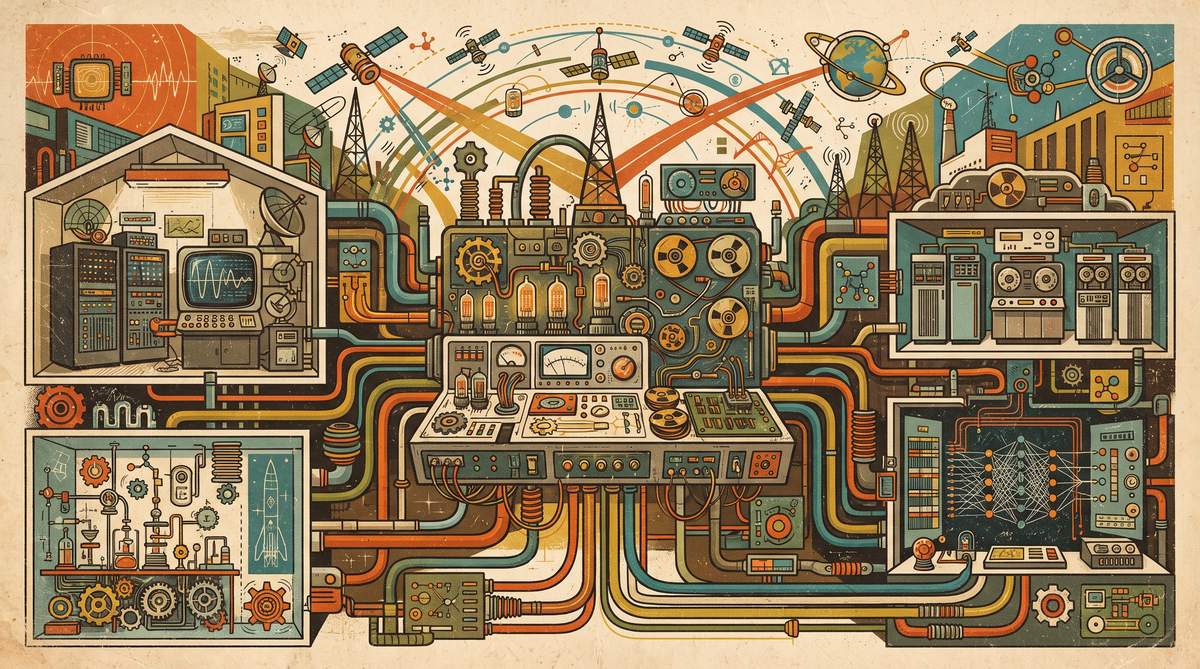
Alibaba’s Qwen team released Qwen-Image-3.0 on July 21, 2026, without publishing benchmark scores or open weights. The announcement focuses entirely on making generated images practical enough for real-world applications. This release abandons traditional performance scoring in favor of visible usability.
TL;DR: Alibaba’s Qwen team released Qwen-Image-3.0 on July 21, 2026, without releasing benchmark scores or open weights. The announcement focuses entirely on making generated images practical enough for real-world applications. The model prioritizes rich content, authentic details, and deep knowledge over abstract test performance.
What is Qwen-Image-3.0 and How Does It Differ from Previous Generations?
Qwen-Image-3.0 is the third generation of Alibaba’s image-generation model, explicitly designed around a single goal: making generated images practical enough for real-world applications (Unite.AI, 2026). Unlike earlier versions that competed heavily on public leaderboards, this iteration ignores standard evaluation metrics entirely. The model focuses on three specific pillars: rich content, authentic details, and deep knowledge.
Previous generations of the Qwen-Image family, such as Qwen-Image-2.0, emphasized technical specifications like native 2K resolution alongside unified generation and editing capabilities (Qwen-Image Blog, 2026). The 2.0 release also prioritized professional typography and a 7B parameter architecture designed for high-fidelity outputs. It was a technical showcase.
Qwen-Image-3.0 shifts the focus. Instead of highlighting parameter counts or resolution metrics, Alibaba presents a model built for immediate deployment in commercial pipelines. The absence of benchmark data means the company expects the visual output to speak for itself. This is a notable departure from industry norms.
Why Did Alibaba Release Qwen-Image-3.0 Without Benchmarks or Weights?
Alibaba withheld benchmark scores and open weights because the Qwen team built the announcement around practical applicability rather than abstract performance metrics (Unite.AI, 2026). In the current AI landscape, leaderboard dominance has become an unreliable indicator of actual utility. Companies routinely optimize for specific test conditions. Real performance suffers.
By omitting standard evaluations, Alibaba forces observers to evaluate the model based on its actual generated samples. The announcement centers on three practical tenets: rich content, authentic details, and deep knowledge. This approach suggests the model excels in complex, nuanced scenarios where traditional metrics fail to capture quality accurately.
This release strategy also creates a deliberate information gap. While the broader Qwen family pushes massive open-weight releases, keeping Qwen-Image-3.0 closed allows Alibaba to control the narrative. The company can demonstrate capability without exposing the underlying architecture to immediate replication. It changes the conversation.
How Does Qwen-Image-3.0 Handle Rich Content and Authentic Details?
Qwen-Image-3.0 handles rich content and authentic details by prioritizing semantic accuracy and contextual depth over simple prompt compliance (Unite.AI, 2026). The model generates images that embed functional text, complex structural elements, and historically accurate details. This directly addresses long-standing weaknesses in AI image generation. Text rendering remains difficult.
Earlier models in the Qwen-Image lineage, specifically Qwen-Image-2.0, introduced professional typography and native 2K resolution to tackle these exact challenges (Qwen-Image Blog, 2026). Qwen-Image-3.0 builds upon this foundation. The deep knowledge component indicates an improved understanding of world knowledge, allowing the model to render specific subjects accurately without relying on generic approximations.
The focus on authentic details suggests the model minimizes common visual artifacts. Hands, faces, and complex architectural structures appear with higher fidelity. This makes the output viable for professional design workflows. Quality matters more than speed.
What Are the Core Capabilities of the Qwen-Image Model Family?
The core capabilities of the Qwen-Image model family include high-resolution generation, professional typography, and unified image editing. The previous major iteration, Qwen-Image-2.0, operated as a 7B parameter model capable of native 2K resolution outputs (Qwen-Image Blog, 2026). This allowed for exceptionally detailed images suitable for commercial print and digital media.
The unified generation-editing pipeline represents a major capability. Users can generate an image from scratch and then apply targeted modifications using natural language commands within the same architecture. This streamlines creative workflows significantly. Efficiency improves dramatically.
Beyond static images, the broader Qwen ecosystem expands into other modalities. The family includes models like Qwen-Audio-3.0-TTS, which offers multilingual text-to-speech across 16 languages with natural language style control (Tongyi Lab, X, 2026). The ecosystem supports diverse media generation.
How Does Qwen-Image-3.0 Compare to the Qwen 3.8 Multimodal Release?
Qwen-Image-3.0 operates as a specialized image model, whereas Qwen 3.8 functions as a massive multimodal architecture with 2.4 trillion parameters (The Decoder, 2026). Alibaba claims Qwen 3.8 ranks as the second most powerful model available, trailing only Anthropic’s Claude Fable 5. The scale differs entirely.
Qwen 3.8 focuses on broad reasoning, front-end coding, and SVG generation across multiple disciplines (Geeky Gadgets, 2026). It serves as a general-purpose intelligence engine. The Qwen team confirmed that Qwen 3.8 will launch as an open-weight model soon (Alibaba_Qwen, X, 2026). This open approach contrasts with the closed Qwen-Image-3.0 release.
While Qwen 3.8 handles diverse multimodal tasks, Qwen-Image-3.0 isolates image generation to push specific boundaries in visual fidelity. The image model targets professionals who need precise, artifact-free visuals with accurate text integration. General models often struggle here. Specialization yields better results.
What Role Does Deep Knowledge Play in Qwen-Image Generation?
Deep knowledge serves as the foundational layer that allows Qwen-Image-3.0 to produce contextually accurate visuals rather than superficially attractive but logically flawed outputs. Alibaba’s Qwen team built the July 21, 2026 announcement around the goal of making generated images practical enough for real-world professional use. This requires the model to understand the relationships between objects, text, and professional design conventions.
Why does this matter for everyday users? Because generic image generators frequently misinterpret complex prompts, leading to spelling errors and structurally impossible scenes. By integrating deep knowledge, Qwen-Image-3.0 aims to process the underlying semantics of a prompt. The model relies on architectural improvements established in Qwen-Image-2.0, which introduced native 2K resolution and unified generation-editing capabilities.
Authentic details naturally emerge from this deep knowledge approach. If a user requests a specific diagram or a densely packed informational poster, the model applies its trained understanding of typography and layout physics. This approach moves away from simply guessing pixel patterns. Instead, the system calculates structural integrity.
How Does Qwen-Image-3.0 Fit Into Alibaba’s Broader AI Strategy?
Qwen-Image-3.0 operates as one critical component of Alibaba’s massive, multi-modal expansion plan targeting enterprise and consumer applications. The Qwen team recently confirmed that their broader Qwen 3.8 model contains 2.4 trillion parameters. The company states this model is continuously evolving and ranks second only to Anthropic’s Claude Fable 5 in overall capability.
The image model does not exist in a vacuum. Alibaba actively pushes a unified ecosystem where text, audio, and visual models share foundational training methodologies. For example, the Tongyi Lab recently released Qwen-Audio-3.0-TTS, a text-to-speech system supporting 16 languages with natural language style control. The overarching strategy focuses on dominating specific verticals.
By releasing a continuous stream of specialized models, Alibaba challenges both domestic competitors like Moonshot AI and international heavyweights. Qwen 3.8 is confirmed to go open-weight soon, which aligns with Alibaba’s strategy to capture developer mindshare. Offering open weights builds a massive community. This drives enterprise adoption.
What Are the Limitations of the Current Qwen-Image-3.0 Release?
The most significant limitation of the current Qwen-Image-3.0 release is the complete absence of quantitative performance data, public model weights, and open API access. Alibaba unveiled the model on July 21, 2026, strictly through a visual showcase rather than a functional developer release. This means independent developers cannot yet verify the system’s claims regarding rich content generation.
Without benchmarks, comparing Qwen-Image-3.0 directly against competitors like Midjourney or Stable Diffusion remains entirely speculative. The Qwen team deliberately chose to skip traditional industry leaderboards. However, this forces potential enterprise adopters to rely solely on Alibaba’s curated marketing examples. Furthermore, the broader Qwen ecosystem faces similar transitional delays.
Industry observers note that Alibaba announced the 2.4-trillion parameter Qwen 3.8 model without providing a concrete release date for the open weights. The phrase “soon is not a date” currently echoes across the AI community regarding Alibaba’s rollout schedule. Developers must wait for actual API access. Until then, trust remains limited.
How Can Developers Prepare for the Qwen-Image-3.0 API and Integration?
Developers can prepare for the eventual Qwen-Image-3.0 API by studying the architecture and integration patterns established during the Qwen-Image-2.0 release. The previous generation introduced a unified generation-editing framework supporting native 2K resolution. Engineers should anticipate that the new API will follow similar RESTful or gRPC structures. Familiarity with Alibaba Cloud infrastructure is essential.
Preparation also involves understanding the broader Qwen 3.8 ecosystem, which will likely share authentication and routing protocols with the image models. The main Qwen 3.8 model boasts 2.4 trillion parameters and is slated for an open-weight release. Developers building automated pipelines should review the Qwen-Audio-3.0-TTS documentation, which supports 16 languages. This demonstrates how Alibaba structures multi-modal inputs.
To integrate these tools properly, teams must audit their existing hardware acceleration capabilities. Running models with trillions of parameters requires massive VRAM allocations. Reviewing the Qwen 2.0 documentation provides the exact payload schemas needed for programmatic image editing. Building mock endpoints now saves valuable time later.
What Is the Expected Impact of Qwen-Image-3.0 on the AI Industry?
Qwen-Image-3.0 is poised to accelerate the industry’s shift away from synthetic, artificial aesthetics toward hyper-authentic, knowledge-driven visual generation. By deliberately ignoring standard benchmarks, Alibaba challenges other AI laboratories to prioritize practical, enterprise-ready output over leaderboard rankings. This forces a reevaluation of how image models are marketed and evaluated globally.
The impact will likely pressure competitors to improve native text rendering and deep contextual accuracy. Alibaba’s broader Qwen 3.8 strategy, claiming superiority over domestic rivals and trailing only Claude Fable 5, establishes a clear competitive hierarchy. When the API launches, it will directly compete with enterprise tiers of Midjourney and OpenAI’s DALL-E. The focus on authentic details shifts user expectations permanently.
Furthermore, the eventual open-weight release of the Qwen 3.8 framework will disrupt local deployment strategies. Chinese AI firms are rapidly gaining momentum, closing the gap with US heavyweights. Qwen-Image-3.0 solidifies this trend. The industry must adapt to these new standards.
Frequently Asked Questions
Are the model weights for Qwen-Image-3.0 currently available for download?
No, Alibaba launched Qwen-Image-3.0 on July 21, 2026, without releasing public model weights or API access. The company currently offers only a visual showcase of the model’s capabilities. Developers must wait for a subsequent announcement regarding open-weight availability.
How does Qwen-Image-3.0 compare to Alibaba’s Qwen 3.8 multimodal model?
Qwen-Image-3.0 is a specialized visual generation tool, whereas Qwen 3.8 is a massive multimodal framework featuring 2.4 trillion parameters. Alibaba claims the broader Qwen 3.8 model ranks second only to Anthropic’s Claude Fable 5 in overall capability. The image model relies on the foundational architecture established by these larger frameworks.
What specific image generation improvements does Qwen-Image-3.0 introduce?
Qwen-Image-3.0 focuses on generating rich content, authentic details, and utilizing deep knowledge to create practical images. Building on Qwen-Image-2.0, which featured native 2K resolution and professional typography, the new generation aims for flawless contextual accuracy. Alibaba released the model without traditional benchmark scores to emphasize real-world visual fidelity.
Will Qwen-Image-3.0 support third-party application integration upon release?
While specific API details remain unannounced, developers anticipate integration based on the unified generation-editing framework established in Qwen-Image-2.0. The broader Qwen ecosystem actively supports third-party development, as evidenced by the Qwen-Audio-3.0-TTS release covering 16 languages. Official API documentation will likely follow the open-weight release of the main Qwen 3.8 model.
Summary
- Benchmark-Free Evaluation: Alibaba released Qwen-Image-3.0 on July 21, 2026, deliberately skipping traditional performance leaderboards to focus entirely on practical, real-world image quality.
- Deep Knowledge Architecture: The model prioritizes authentic details and rich content, building upon the native 2K resolution and unified generation-editing framework established in Qwen-Image-2.0.
- Ecosystem Integration: Qwen-Image-3.0 operates within Alibaba’s massive 2.4-trillion parameter Qwen 3.8 strategy, which the company claims is second only to Anthropic’s Claude Fable 5.
- Developer Readiness: Public model weights and API access for the image generator are currently unavailable, though the main Qwen 3.8 framework is confirmed for an upcoming open-weight release.
- Industry Pressure: By focusing on deep knowledge and professional typography, Alibaba forces competing AI labs to prioritize structural accuracy and contextual logic over purely aesthetic outputs.