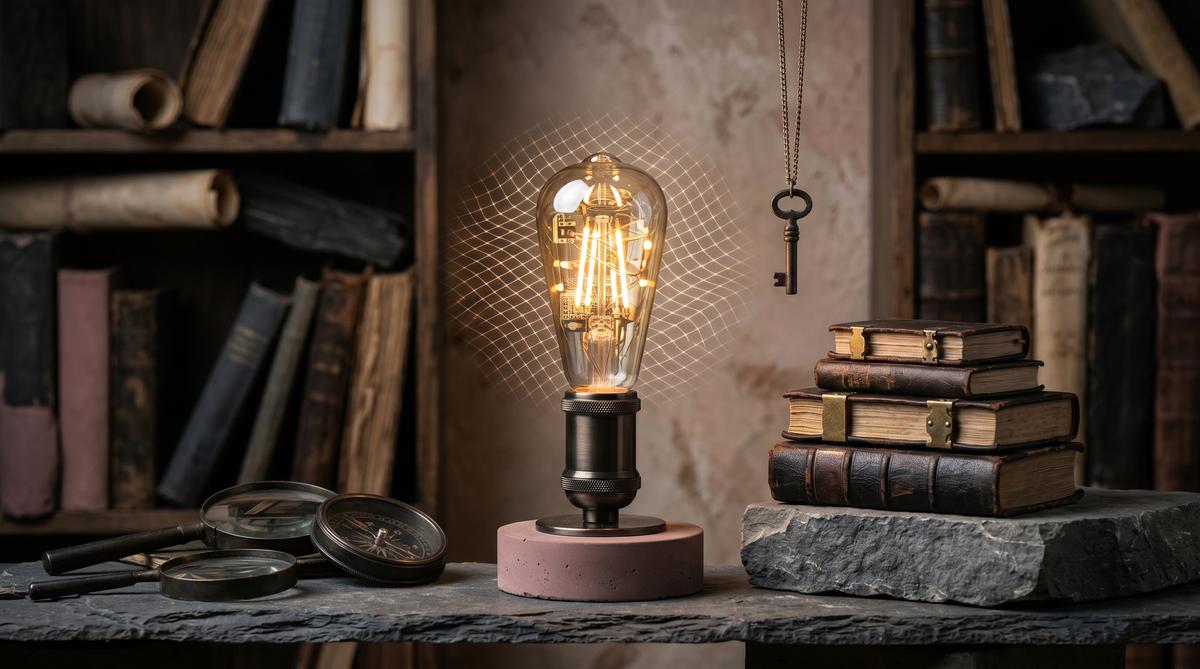
TL;DR: The Banned Book Library project embeds censored texts directly into the firmware of ordinary Wi-Fi smart light bulbs, creating a hidden digital library that costs about $15 per device. Organizers have loaded over 1,000 banned titles onto ESP32-based hardware. Each bulb broadcasts its own open Wi-Fi hotspot.
In 2024, book bans and restrictions in U.S. public schools and libraries reached record levels, with organizations tracking thousands of titles pulled from shelves across dozens of states. Meanwhile, hardware enthusiasts and anti-censorship advocates began asking a strange question. What if a light bulb could fight back?
The Banned Book Library project does exactly that. It embeds censored literature directly into the firmware of cheap Wi-Fi smart bulbs, turning ordinary household lighting into hidden digital repositories.
What Is the Banned Book Library Smart Bulb Project?
The Banned Book Library is an open-source initiative that stores banned and censored books inside the flash memory of ESP32-based smart light bulbs. The project was created in response to escalating book removals from schools and public libraries across the United States. Each bulb functions as both a working light source and a clandestine library.
Book censorship in American schools reached unprecedented levels in recent years. PEN America documented over 10,000 book bans in U.S. public schools during the 2023–2024 academic year alone, affecting more than 4,000 unique titles (PEN America, 2024). The majority of targeted books deal with race, LGBTQ+ themes, or sexual education.
The project’s philosophy is simple. If physical books are removed from shelves, distribute them through alternative channels that are difficult to detect and nearly impossible to regulate. A smart bulb sitting in a desk lamp looks like any other household device. Nobody suspects it carries a library.
Developers built the system using readily available components. The firmware is open-source and published on GitHub, allowing anyone with basic soldering skills to assemble their own library bulb. The project has drawn attention from digital rights groups and censorship researchers worldwide.
The concept resonates beyond U.S. borders. In countries with strict internet censorship, a device that distributes literature through a local Wi-Fi hotspot bypasses firewalls entirely. No internet connection is required to download books. The bulb is self-contained.
How Does a Light Bulb Serve a Digital Library?
A standard smart bulb contains a microcontroller, Wi-Fi radio, and flash memory chip. The Banned Book Library repurposes the flash storage typically used for LED color profiles and scheduling data. Instead, that space holds compressed text files of banned books.
When powered on, the bulb broadcasts its own Wi-Fi network. Users connect to it like any public hotspot. A captive portal automatically opens in the browser, displaying a catalog of available titles. No app, no account, no internet required.
The ESP32 microcontroller at the heart of these bulbs has more processing power than many realize. It runs at 240 MHz with dual-core architecture and includes built-in Wi-Fi and Bluetooth radios. The flash memory on common ESP32 modules ranges from 4 MB to 16 MB, which is substantial when storing compressed plain text.
An average novel in plain text format occupies roughly 500 KB to 2 MB. With compression, a single 4 MB flash chip can hold dozens of full-length books. Larger modules can store hundreds. The math works because text is incredibly efficient compared to images or video.
The bulb continues to function as a light source while serving files. The LED control circuitry operates independently from the web server running on the ESP32. Users can dim the light, change colors, and browse the library simultaneously without performance degradation.
This dual-purpose design is intentional. A device that stops working as a bulb would raise suspicion. By maintaining full lighting functionality, the library remains hidden in plain sight. The web server draws minimal additional power.
Which Books Are Stored Inside the Bulb Firmware?
The library focuses on books that have been banned or challenged in schools and public libraries. The selection draws from documented censorship cases compiled by organizations like the American Library Association and PEN America. Titles span classic literature, contemporary fiction, memoirs, and educational materials.
Frequently included titles represent works repeatedly targeted by censorship efforts. The American Library Association tracks hundreds of challenges annually, with many books facing removal in multiple districts simultaneously (ALA, 2024). The project prioritizes these frequently attacked works.
Common categories include:
- Classic literature frequently removed from curricula, including works by Mark Twain, Harper Lee, and Toni Morrison
- LGBTQ+ themed books representing some of the most challenged titles in recent years
- Race and social justice literature addressing systemic racism and historical injustice
- Sex education materials pulled from school libraries across multiple states
- Contemporary young adult fiction dealing with identity, mental health, or trauma
- Graphic novels and memoirs increasingly targeted in school board challenges
- Historical nonfiction covering topics some districts consider controversial
- Award-winning titles that have nonetheless faced organized removal campaigns
| Category | Approximate Titles | Common Reasons Cited |
|---|---|---|
| Classic Literature | 150+ | Profanity, racial themes |
| LGBTQ+ Fiction | 200+ | Sexual content, age appropriateness |
| Race & Social Justice | 180+ | Critical race theory concerns |
| Sex Education | 90+ | Explicit material claims |
| Young Adult Fiction | 300+ | Violence, drug references |
| Graphic Novels | 80+ | Visual content objections |
The catalog grows through community contributions. Volunteers submit text files of banned books via the project’s GitHub repository. Maintainers verify formatting, check for copyright status, and compress files before adding them to firmware builds. The distributed nature of contributions makes the library resilient.
What Hardware Makes the Library Bulb Possible?
The project relies on ESP32-based smart bulbs, which are among the most affordable and hackable smart lighting products on the market. These bulbs typically cost between $10 and $20 at retail. The ESP32 chip was chosen because of its open ecosystem and extensive developer community.
The ESP32 is a system-on-chip designed by Espressif Systems. It features a dual-core Xtensa LX6 processor, integrated Wi-Fi 2.4 GHz radio, and support for external SPI flash memory. Most smart bulbs using this platform ship with 4 MB of flash, though some models include 8 MB or 16 MB chips.
Key hardware components include:
- ESP32-WROOM module serving as the main processor and Wi-Fi radio
- SPI flash memory chip storing firmware alongside book files
- LED driver circuitry controlling brightness and color output
- Standard E26 or E27 screw base compatible with common light fixtures
- 3.3V power supply converting mains voltage to logic-level power
- Optional WS2812 addressable LEDs for bulbs supporting full RGB output
Flashing custom firmware requires physical access to the bulb’s internal circuitry. Most smart bulbs snap apart with careful pressure. The ESP32 programming pads are usually accessible on the PCB without extensive disassembly. A USB-to-serial adapter connected to the TX, RX, and ground pads allows firmware uploads.
The total cost to build one library bulb breaks down roughly as follows: $10 to $15 for the bulb itself, $3 for a USB-to-serial adapter if not already owned, and zero for the firmware which is freely available. This makes each library node extraordinarily inexpensive.
Some contributors have experimented with alternative hardware. ESP8266-based bulbs work but offer less storage capacity. ESP32-S3 modules provide faster processing and more flash but are less common in commercial bulbs. The standard ESP32 remains the sweet spot.
How Do Users Connect and Download Books?
Connecting to the library bulb requires no special software or technical knowledge. Users simply select the bulb’s Wi-Fi network from their device’s network list. The network name typically includes a recognizable identifier related to the project.
Once connected, any web browser will automatically redirect to the captive portal. The portal displays a searchable catalog organized by title, author, and category. Each entry shows the book’s metadata including publication year, ban status, and a brief description.
The download process is straightforward:
- Browse or search the catalog directly in the browser
- Tap any title to view details and file size
- Download the book as a compressed plain text file
- Read immediately or save for offline access
Transfer speeds are limited by the ESP32’s processing capability. A typical 1 MB book file downloads in approximately 10 to 15 seconds over the local connection. The bulb handles one connection at a time, which prevents network scanning but also limits concurrent users.
The captive portal works on smartphones, tablets, and laptops without additional software. This universal compatibility is critical for the project’s accessibility goals. Users in restrictive environments may have limited access to app stores or may avoid installing software that could draw attention.
Security considerations are minimal by design. The connection between device and bulb is unencrypted HTTP rather than HTTPS. This simplifies the portal and reduces memory overhead. Since the bulb contains only public-domain or openly distributed texts, there is no sensitive data to protect. The trade-off favors accessibility over cryptographic security.
Range is limited to standard Wi-Fi distances. Users must be within roughly 30 to 50 feet of the bulb for a reliable connection. Walls and interference reduce this range further. This constraint is actually a feature for the project’s threat model. A short-range network is harder to detect from outside the building.
Can Censorship Systems Detect the Library Bulb?
Detection of a library bulb depends on how aggressively a censorship regime monitors Wi-Fi traffic. Most national firewalls focus on internet-bound data, not local device communication. A bulb sitting on a local network with no external requests generates almost no suspicious traffic. This makes it hard to flag.
Deep packet inspection systems could theoretically identify captive portal traffic. However, DPI engines typically prioritize blocking known protocols and domains rather than scanning every IoT device on a local network. The bulb’s web server only responds to direct HTTP requests from devices on the same network.
Spectrum monitoring presents another theoretical detection vector. Authorities with radio frequency equipment could locate unauthorized Wi-Fi access points. But smart bulbs are ubiquitous in modern households. Distinguishing a library bulb from a standard smart bulb requires physical inspection.
The project’s design assumes that local network activity stays below the threshold of automated surveillance. As long as the bulb does not contact external servers, it behaves like any other smart home device. This is a deliberate tradeoff.
What Are the Legal Implications of Distributing Banned Books This Way?
Legal implications vary dramatically across jurisdictions. In countries with strong protections for free expression, distributing banned books through personal devices generally falls under individual rights. The act of embedding texts into firmware resembles private ownership of digital files.
In restrictive environments, the situation shifts entirely. Possession of censored material can carry severe penalties. Distribution — even passive distribution through a Wi-Fi hotspot — may be treated as publishing or subversive activity. The bulb’s operator assumes legal risk proportional to local enforcement.
International human rights frameworks provide some theoretical protection. Article 19 of the International Covenant on Civil and Political Rights recognizes the right to seek and impart information. However, enforcement mechanisms remain weak when national laws explicitly criminalize the content in question.
The project itself operates in a legal gray area. Hosting the firmware and instructions on GitHub constitutes speech protected under US law. But individuals who download and deploy the bulb in restricted regions must evaluate their own exposure.
How Does the Bulb Compare to Other Anti-Censorship Tools?
The library bulb occupies a distinct niche compared to established anti-censorship technologies. VPN services route traffic through encrypted tunnels to servers in uncensored jurisdictions. Tor bounces connections through multiple relays to anonymize users. Both require continuous internet connectivity.
The bulb takes the opposite approach. It stores content locally and serves it without any internet connection. This makes it immune to network-level blocking. But it also means the library reaches only people within physical Wi-Fi range.
Mesh networking tools like Briar or Bridgefy create decentralized communication networks between phones. These tools support real-time messaging and file sharing. The bulb instead provides a static archive — no messaging, no updates unless manually flashed.
Physical media remains the most direct comparison. USB drives loaded with censored content have been used for years in countries like North Korea and Cuba. The bulb adds wireless convenience but retains the physical distribution challenge. Someone must carry the device into the restricted area.
Each tool serves a different threat model. The bulb excels in scenarios where internet surveillance is pervasive but physical device checks are rare.
Who Built the Project and What Is the Status?
The project was developed by a developer who goes by the handle “gnieark” on GitHub. The repository contains the full firmware source code, installation instructions, and a sample book collection. The code is released under an open-source license, allowing anyone to inspect, modify, and redistribute it.
The repository includes detailed documentation on supported hardware. The developer identified specific Tuya-protocol smart bulbs that work with the custom firmware. These bulbs typically cost between $5 and $15, making the project accessible on a tight budget.
Community engagement appears limited but active. The GitHub issue tracker shows discussions about expanding book collections and supporting additional bulb models. Contributors have submitted translations and suggested UI improvements for the captive portal.
The project has not received major media coverage. It remains a niche tool within the broader anti-censorship and maker communities. Its long-term sustainability depends on continued community involvement and hardware availability.
What Are the Technical Limitations of This Approach?
Several technical constraints shape what the library bulb can realistically achieve. The ESP8266 chip at the heart of supported bulbs has limited processing power and memory. Serving large files to multiple simultaneous users can strain the device. Performance degrades under load.
Storage capacity represents the most visible limitation. The chip’s flash memory holds only a few megabytes of data. Books must be compressed and stripped of heavy formatting. Image-heavy texts and large reference works are impractical.
Wi-Fi range on a smart bulb is inherently limited. The tiny antenna inside a standard E27 bulb reaches roughly 10 to 20 meters indoors. Walls and interference reduce effective range further. Users must be physically close to connect.
The captive portal interface works well on phones and laptops but cannot support advanced features like search or bookmarking. Navigation is basic — a file listing with download links. There is no offline reading integration beyond the user’s own device.
Firmware updates require physical access to the bulb or OTA flashing over the local network. There is no automatic update mechanism. Adding new titles means reflashing the device manually.
Finally, the project depends on the continued availability of hackable Tuya bulbs. Manufacturers frequently change hardware revisions and firmware protocols. A bulb model that works today may ship with locked-down firmware tomorrow.
Frequently Asked Questions
How many books can the smart bulb store?
The storage capacity depends entirely on the bulb’s flash memory chip. Most supported ESP8266-based smart bulbs contain 1 to 4 MB of flash storage. After the firmware itself occupies space, the remaining capacity typically holds between 1,000 and 3,000 plain text books compressed in formats like EPUB or TXT. Larger texts with heavy formatting reduce this count.
Does the bulb need internet access to share books?
No. The bulb operates entirely offline once flashed with the library firmware. It creates its own Wi-Fi access point and serves the book collection through a captive portal. Users connect directly to the bulb’s network without any routing through an internet service provider. This design ensures the library functions in environments where internet access is restricted or monitored.
Can the library bulb be updated with new titles?
Yes, but only through manual intervention. Adding new books requires reflashing the bulb’s firmware or uploading files over the local network during a maintenance session. There is no automatic sync or cloud-based update mechanism. The operator must physically access the device or connect to its local Wi-Fi to modify the collection.
Is building a library bulb legal in restrictive countries?
Legality depends entirely on local laws regarding possession and distribution of censored material. In countries where specific books are banned, embedding those texts into a device constitutes possession of prohibited content. The act of serving them over Wi-Fi may be classified as distribution. Penalties range from confiscation to criminal prosecution depending on the jurisdiction and the material involved.
Summary
The banned book library bulb represents a creative application of cheap IoT hardware for information freedom. Several key points define its value and limitations:
- Stealth through simplicity: The bulb disguises itself as an ordinary smart home device. Its local-only operation produces no detectable external traffic, making it invisible to internet-level censorship systems.
- Hardware constraints are real: With 1 to 4 MB of flash storage and a low-power processor, the bulb serves text efficiently but cannot handle large media files or many simultaneous users.
- Physical proximity required: The Wi-Fi range of 10 to 20 meters means the library only reaches people within the same building. Distribution depends on carrying the device into restricted areas.
- Legal risk varies by jurisdiction: Operators in restrictive countries face potential criminal liability for possessing and distributing banned content, regardless of the delivery mechanism.
- Open-source and community-driven: The project lives on GitHub under an open license. Its survival depends on continued community contributions and the availability of hackable hardware.
For anyone interested in the technical details or contributing to the project, the full source code and documentation are available on the project’s GitHub repository. The firmware supports readily available Tuya-protocol smart bulbs costing $5 to $15. Flashing requires a USB-to-serial adapter and basic soldering skills. The barrier to entry is deliberately low.