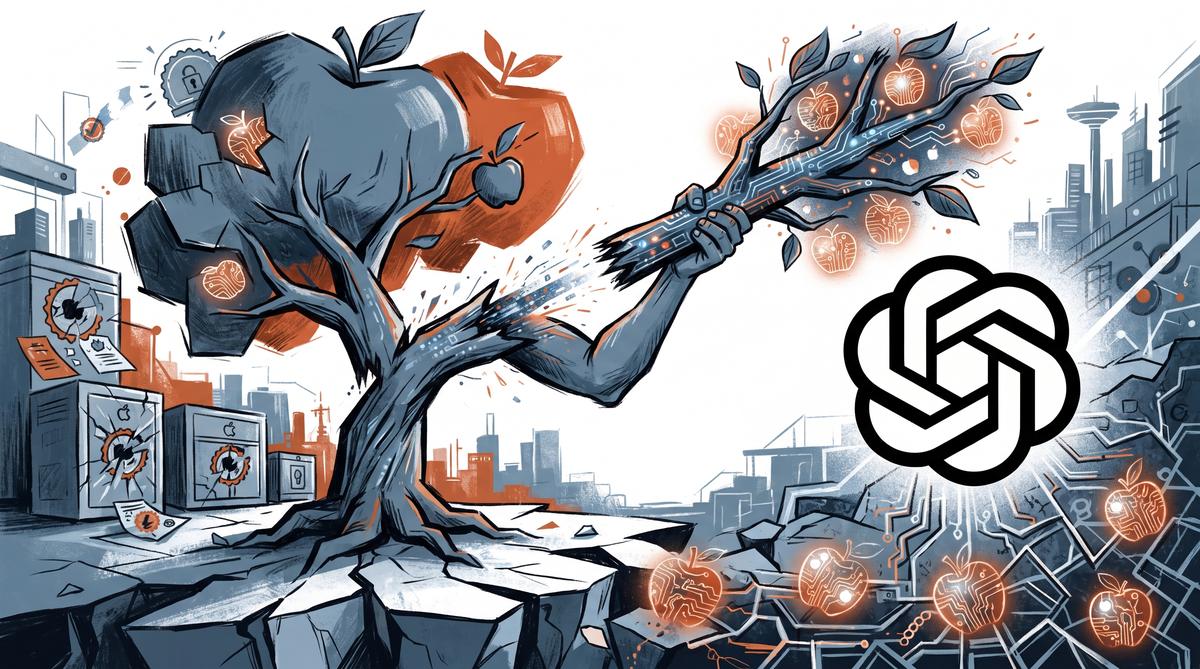
Apple filed a lawsuit against OpenAI on July 10, 2026, alleging that the AI company orchestrated a systematic campaign to steal trade secrets by poaching Apple hardware executives. The complaint, filed in federal court, claims the scheme reached “every level” of OpenAI’s recruiting operations and involved thousands of confidential documents.
TL;DR: Apple filed a lawsuit on July 10, 2026, accusing OpenAI of stealing trade secrets by poaching former Apple employees who allegedly took thousands of confidential hardware design documents. The complaint claims the scheme reached “every level” of OpenAI’s recruiting operations. Apple alleges OpenAI mentored incoming employees on bringing confidential information to their new roles.
What Did Apple Accuse OpenAI of in the Lawsuit?
Apple’s complaint, filed on July 10, 2026, accuses OpenAI of misappropriating trade secrets to benefit its push into consumer hardware. According to NBC News, the lawsuit alleges that OpenAI poached Apple workers and coaxed them into sharing confidential material in a bid to create hardware products. The suit names OpenAI and two former Apple employees as defendants.
The complaint describes a coordinated effort. CNBC reports that Apple claims the scheme operated “at every level” of OpenAI’s organization. Apple and OpenAI had entered a high-profile partnership in 2024 when ChatGPT was integrated into the iPhone’s operating system, making this lawsuit a significant rupture in that alliance.
According to CNN, Apple alleges that OpenAI stole the iPhone maker’s trade secrets to develop its own yet-to-be-unveiled AI gadgets. The Los Angeles Times characterized the filing as a “blockbuster Silicon Valley lawsuit,” underscoring the magnitude of the allegations between two of the technology industry’s most prominent companies.
The Guardian reports that the suit claims OpenAI systematically poached Apple workers, coaxing them to share confidential material. Apple’s legal team argues that this was not incidental knowledge transfer but a deliberate strategy to accelerate OpenAI’s hardware ambitions using proprietary Apple information.
Who Are the Former Apple Employees Named in the Suit?
The lawsuit names two former Apple employees as defendants alongside OpenAI. According to AppleInsider, one of the individuals is Apple’s previous Vice President of Product Design for iPhone and Apple Watch. This executive held a senior position with deep access to Apple’s hardware design processes and product roadmaps.
The second defendant is another former Apple employee who worked in a hardware-related capacity. The complaint alleges that both individuals maintained an ongoing relationship with OpenAI while still employed at Apple, preparing to transition and bring confidential information with them.
AppleInsider reports that the former VP of Product Design occupied a role central to Apple’s hardware development. This position would have granted access to unreleased product designs, engineering specifications, supplier agreements, and manufacturing processes — the exact categories of information Apple says were misappropriated.
The selection of these specific individuals is notable. Both had deep knowledge of Apple’s hardware ecosystem. By targeting employees with such access, OpenAI could potentially shortcut years of hardware development experience that Apple has accumulated.
What Confidential Information Was Allegedly Taken?
Apple’s complaint specifies several categories of confidential information that former employees allegedly took to OpenAI. According to Decrypt, the allegations include confidential designs, supplier information, and engineering files taken before the employees joined OpenAI. These materials span multiple aspects of Apple’s hardware development pipeline.
Ynetnews reports that the lawsuit alleges misappropriation of confidential hardware information, including designs and supply chain data. Supply chain details are particularly sensitive — Apple’s supplier relationships, manufacturing processes, and component sourcing strategies represent years of negotiated agreements and engineering collaboration.
The complaint also references prototypes and hardware documentation. According to AOL’s coverage, Apple accuses OpenAI of telling recruits to bring confidential prototypes and hardware to job interviews. This allegation suggests that OpenAI’s recruiting process itself served as a mechanism for extracting proprietary information.
Tom’s Hardware reports that Apple claims OpenAI mentored incoming employees on how to bring confidential information with them. This mentoring allegation implies a structured approach — not passive acceptance of what employees might share, but active guidance on transferring proprietary data from Apple to OpenAI’s hardware division.
The scope of alleged document theft is substantial. Apple claims thousands of confidential files were involved, covering hardware designs, engineering specifications, supplier data, and prototype documentation accumulated over years of product development at Apple.
How Did OpenAI Recruit Apple Employees According to the Complaint?
The complaint paints a picture of systematic recruitment aimed at extracting Apple’s hardware expertise. According to Tom’s Hardware, Apple alleges that OpenAI mentored incoming employees on bringing confidential information. This mentoring allegedly included guidance on what materials to retain and how to transport them when leaving Apple.
AOL reports that Apple accuses OpenAI of instructing recruits to bring confidential prototypes and hardware to job interviews. This practice, if proven, would represent a deliberate strategy to evaluate candidates based on their access to Apple secrets — and to encourage the transfer of physical prototypes before employment formally began.
CNBC’s coverage highlights that Apple claims the scheme reached “every level” of OpenAI’s recruiting operations. This phrasing suggests that the alleged practices were not isolated to a single recruiter or team but were embedded across OpenAI’s hiring infrastructure for hardware roles.
The Guardian reports that OpenAI coaxed Apple workers to share confidential material during the recruitment process. The complaint describes recruitment conversations where candidates were allegedly encouraged to discuss proprietary Apple projects and demonstrate their access to confidential information as part of proving their value to OpenAI’s hardware ambitions.
The recruitment strategy allegedly targeted employees with specific knowledge. According to AppleInsider, the former VP of Product Design maintained a relationship with OpenAI while still at Apple, suggesting that recruitment began well before any formal departure announcement was made.
What Hardware Is OpenAI Building That Prompted the Lawsuit?
OpenAI’s hardware ambitions are central to the lawsuit’s context. According to the Boston Herald, Apple accuses OpenAI of stealing trade secrets while seeking to build its own hardware for ChatGPT. This represents a significant strategic expansion for OpenAI, which has primarily operated as a software and AI model company.
CNN reports that Apple alleges OpenAI is developing “yet-to-be-unveiled AI gadgets.” The exact nature of these devices remains undisclosed, but the lawsuit implies they would compete in the consumer hardware space where Apple has decades of accumulated expertise and intellectual property.
Ynetnews notes that the stolen information relates to hardware designs and supply chain data intended to support OpenAI’s push into consumer hardware. Building consumer devices requires deep knowledge of manufacturing processes, component sourcing, product design cycles, and quality assurance — all areas where Apple’s trade secrets would provide significant acceleration.
The partnership context intensifies the dispute. CNBC reminds us that Apple and OpenAI partnered in 2024 to integrate ChatGPT into iOS. OpenAI’s parallel development of competing hardware, using allegedly stolen Apple expertise, transforms a collaborative relationship into an adversarial one with substantial legal and commercial implications.
How Does This Lawsuit Affect the Apple-OpenAI Partnership?
The partnership between Apple and OpenAI faces serious strain following this lawsuit. The two companies entered into a high-profile partnership in 2024 when ChatGPT was integrated into the iPhone’s operating system (CNBC, 2026). This integration was celebrated as a major step forward for consumer AI accessibility across hundreds of millions of Apple devices worldwide.
Now that relationship looks fragile. Apple alleges that OpenAI’s recruitment strategy involved coaxing Apple employees to share confidential material in a bid to create competing hardware (The Guardian, 2026). Such accusations directly undermine the trust required for collaborative product development between business partners.
Industry analysts question whether the existing ChatGPT integration in iOS will survive this legal battle. Apple has invested heavily in its Apple Intelligence platform, which uses ChatGPT as an optional feature for complex user queries. The lawsuit creates an awkward dynamic where Apple simultaneously relies on OpenAI’s technology while accusing the company of intellectual property theft.
The broader competitive landscape adds pressure to this tension. OpenAI is actively building its own hardware capabilities, which positions it as a potential competitor to Apple’s device ecosystem. Partnerships between companies often dissolve when one partner begins developing products that directly challenge the other’s core business, and this lawsuit accelerates that natural friction.
What Legal Precedents Apply to Trade Secret Cases in Silicon Valley?
Silicon Valley has a long history of trade secret disputes between competing technology companies. These cases typically involve allegations that employees carried confidential information from one employer to another, often through digital files or memorized technical knowledge. The Defend Trade Secrets Act of 2016 established federal protections that complement existing state-level laws in California.
Apple’s complaint adds to this legal tradition. The suit claims OpenAI poached Apple workers and encouraged them to share confidential material during the recruitment process itself (The Guardian, 2026). This specific allegation of systematic recruitment-based IP transfer distinguishes the case from simpler employee departure scenarios.
Previous landmark cases provide context for how courts handle these disputes. The Waymo v. Uber lawsuit from 2017 resulted in a settlement after Waymo accused former employees of stealing self-driving car technology. That case established that companies must actively protect their trade secrets and can pursue significant damages when competitors benefit from misappropriated intellectual property.
Apple’s case appears particularly strong given the seniority of the employees involved. One defendant previously served as Apple’s Vice President of Product Design for iPhone and Apple Watch (AppleInsider, 2026). Executives at this level typically have access to extensive confidential information including product roadmaps, supplier agreements, and proprietary engineering specifications.
What Are the Potential Consequences for OpenAI?
OpenAI faces substantial legal and financial exposure if Apple’s allegations prove accurate. Trade secret theft cases can result in significant monetary damages, court-ordered injunctions against product development, and mandatory changes to corporate recruitment practices. The company’s hardware ambitions could face delays or cancellation depending on how courts rule.
The timing complicates matters significantly. Apple alleges that OpenAI has stolen trade secrets to develop its own yet-to-be-unveiled AI gadgets (CNN, 2026). If courts grant preliminary injunctions, OpenAI might need to halt hardware development entirely while the case proceeds through the legal system.
Beyond direct legal penalties, OpenAI risks reputational damage that could affect future partnerships. The lawsuit claims the scheme was ‘at every level’ of OpenAI’s organization (CNBC, 2026). Such systemic allegations suggest corporate culture problems that other potential partners might find concerning when evaluating collaboration opportunities.
Recruitment practices will likely face intense scrutiny. Apple accuses OpenAI of telling recruits to bring confidential prototypes and hardware to job interviews (AOL, 2026). If proven, this practice would represent a deliberate corporate strategy rather than isolated incidents of employee misconduct. Courts tend to view organized IP appropriation more harshly than individual violations.
The financial impact extends beyond potential damages awards. Legal fees for defending against Apple’s resources will be substantial. Product development delays could cost OpenAI its first-mover advantage in AI hardware. Investor confidence might waver as litigation creates uncertainty around the company’s hardware strategy and corporate governance practices.
How Have Apple and OpenAI Responded Publicly?
Apple filed the lawsuit on Friday, July 10, 2026, making its position clear through legal filings rather than public statements (NBC News, 2026). The company chose the courtroom as its primary communication channel, letting the detailed complaint speak for itself. This approach aligns with Apple’s typical strategy of addressing legal matters through formal proceedings.
The lawsuit documents reveal Apple’s specific grievances in considerable detail. Apple alleges that two ex-employees maintained an ongoing scheme to transfer confidential information to OpenAI (AppleInsider, 2026). The complaint describes how these former executives allegedly took designs, supplier information, and engineering files before joining OpenAI’s hardware division.
OpenAI’s public response has been more measured. The company has not issued detailed rebuttals to the specific allegations, which is standard practice during ongoing litigation. Legal counsel typically advises against public commentary that could prejudice proceedings or create additional liability exposure.
The silence from both companies regarding partnership implications speaks volumes. Neither Apple nor OpenAI has addressed how the lawsuit affects their existing ChatGPT integration in iOS. This silence leaves consumers and industry observers speculating about the future of collaborative features that millions of users currently access through their Apple devices.
Media coverage has focused heavily on the dramatic nature of the allegations. Reports emphasize that Apple accuses OpenAI of mentoring incoming employees on bringing confidential information to their new roles (Tom’s Hardware, 2026). This characterization paints OpenAI as an organization that systematically encouraged intellectual property transfer.
What Does This Mean for Big Tech Employee Mobility?
This lawsuit sends ripples through Silicon Valley’s talent ecosystem. Engineers and executives routinely move between competing companies, bringing expertise and institutional knowledge to their new employers. The standard practice of hiring experienced talent from rivals now faces heightened legal scrutiny.
Apple’s aggressive legal stance signals a shift toward stricter enforcement. The company claims that OpenAI’s recruitment strategy existed ‘at every level’ of the organization (CNBC, 2026). Such language suggests Apple views this as a systematic problem requiring judicial intervention rather than an isolated incident.
Employees considering job changes between competitors will likely face increased caution. Companies may implement stricter exit protocols, more comprehensive device audits, and enhanced monitoring of file access patterns. The era of casual talent movement between rival firms might be drawing to a close.
The case also highlights the tension between innovation and intellectual property protection. When employees move between companies, they carry tacit knowledge that is difficult to separate from protected trade secrets. Courts must balance legitimate career mobility against the risk of systematic IP appropriation, and this case could establish important boundaries for future disputes.
For hardware engineers specifically, the implications are profound. Apple’s complaint involves designs, supply chain data, and confidential engineering specifications (Ynetnews, 2026). This type of technical information is harder to compartmentalize than software code or marketing strategies, making hardware talent moves inherently riskier for all parties involved.
Frequently Asked Questions
What specific trade secrets does Apple claim were stolen?
Apple alleges that former employees took confidential designs, supplier information, and engineering files before joining OpenAI (Decrypt, 2026). The lawsuit specifically mentions hardware prototypes and supply chain data that the employees allegedly shared during OpenAI’s recruitment process (AOL, 2026). One defendant previously served as Apple’s Vice President of Product Design for iPhone and Apple Watch, giving him access to extensive proprietary information (AppleInsider, 2026).
Is Apple ending its ChatGPT integration with OpenAI?
Neither company has publicly addressed the future of their partnership following the lawsuit. The two companies entered into a high-profile partnership in 2024 when ChatGPT was integrated into the iPhone’s operating system (CNBC, 2026). Apple has not announced any changes to this integration, but the lawsuit creates significant uncertainty about whether the collaboration can continue under these circumstances.
What damages is Apple seeking in the lawsuit?
Specific damage amounts have not been disclosed in publicly available reports about the lawsuit. Apple filed the complaint on Friday, July 10, 2026, alleging misappropriation of trade secrets to benefit OpenAI’s hardware development efforts (NBC News, 2026). The company is likely seeking both monetary damages and injunctions to prevent OpenAI from using any allegedly stolen information in its upcoming AI gadgets (CNN, 2026).
How common are trade secret lawsuits between tech giants?
Trade secret disputes occur regularly in Silicon Valley, though lawsuits of this magnitude between active partners are relatively rare. The Waymo v. Uber case in 2017 involved similar allegations of systematic IP theft through employee movement. Apple’s lawsuit claims the scheme operated ‘at every level’ of OpenAI’s organization, suggesting a more organized effort than typical individual employee disputes (CNBC, 2026).
Summary
The Apple vs. OpenAI lawsuit represents a significant escalation in how big tech companies protect their intellectual property. Several key takeaways emerge from this developing story:
- Systematic allegations: Apple claims OpenAI operated a recruitment strategy designed to extract confidential information ‘at every level’ of its organization, not just through isolated incidents (CNBC, 2026).
- Senior executive involvement: The lawsuit targets Apple’s former Vice President of Product Design for iPhone and Apple Watch, indicating the high-level nature of the alleged IP transfer (AppleInsider, 2026).
- Partnership at risk: The existing ChatGPT integration in iOS faces an uncertain future as Apple accuses its partner of systematic trade secret theft (CNBC, 2026).
- Hardware ambitions threatened: OpenAI’s plans to develop AI gadgets could face court injunctions and development delays if Apple’s allegations are substantiated (CNN, 2026).
- Industry-wide implications: The case will likely influence how tech companies approach employee mobility, recruitment practices, and partnership agreements across Silicon Valley.
This lawsuit will be closely watched by legal experts, industry analysts, and competitors alike. The outcome could reshape how technology companies balance talent mobility with intellectual property protection for years to come. For ongoing coverage of this story and its impact on the broader AI industry, stay tuned to future updates.